The day a shipping diversion reached the assembly line
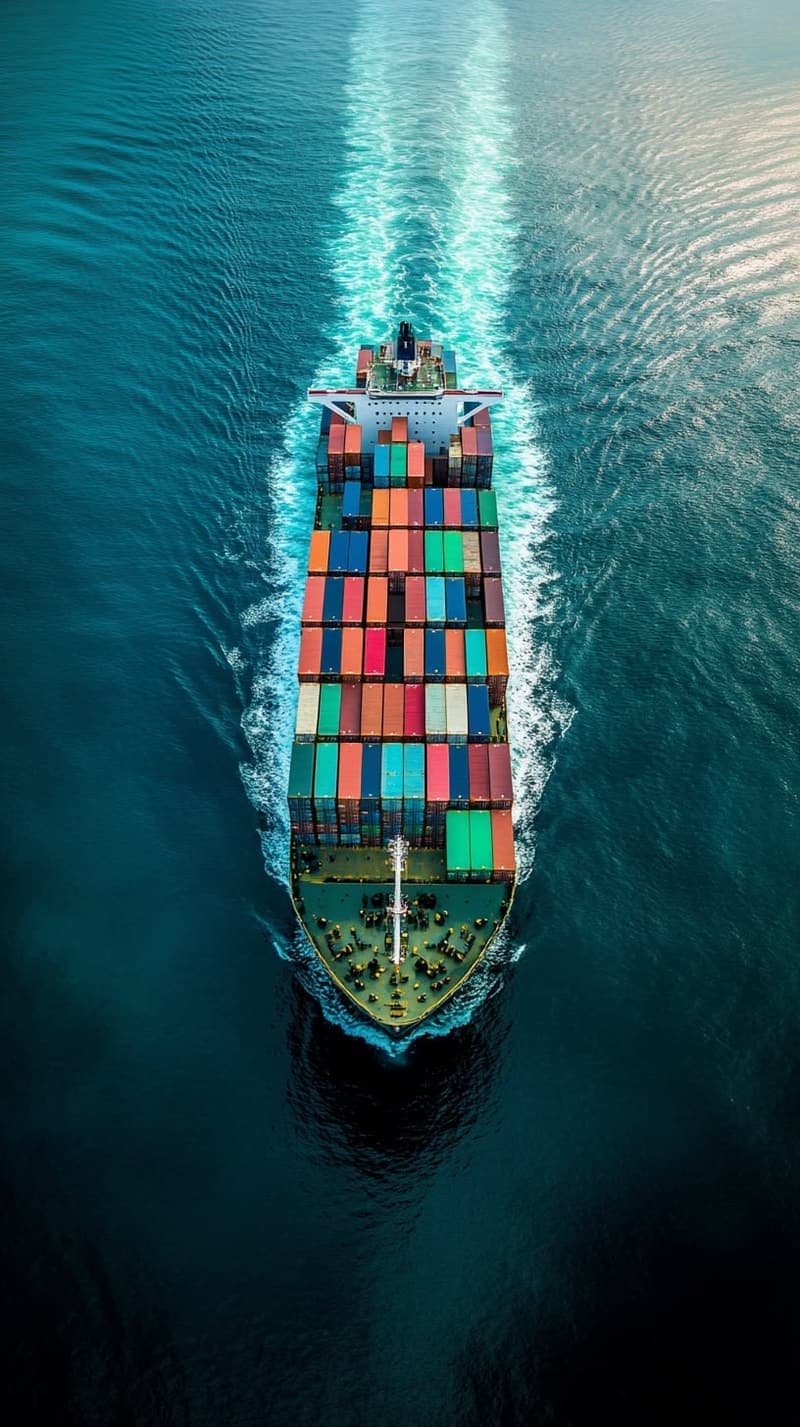
In January 2024, a conflict thousands of kilometres from Tesla’s factory in Grünheide, Germany, became a production problem inside the plant. Attacks on commercial vessels in the Red Sea prompted major shipping lines to divert Asia to Europe services away from the Suez Canal and around the Cape of Good Hope. The safer route was also considerably longer.
On 11 January, Tesla told Reuters that it would suspend most vehicle production at its Berlin-Brandenburg factory from 29 January to 11 February. The company attributed the gap to longer transport times created by the rerouting of ships. Volvo Cars announced a three-day pause at its Ghent factory because gearboxes had been delayed. These were the first conspicuous examples of the Red Sea crisis interrupting European automotive production.
The event is useful because it exposes a distinction that supply-chain discussions often blur. Seeing a vessel diversion is a visibility problem. Understanding which delayed component will stop which production sequence, on what date, and choosing the best response is a decision problem. Mobilising that response across carriers, suppliers, plants, warehouses and enterprise systems is an orchestration problem.
Most organisations have acquired pieces of this capability. Far fewer can connect them at the speed of a live disruption.
What exactly happened?
The Red Sea is not merely another maritime corridor. Together with the Bab el-Mandeb Strait and the Suez Canal, it forms the shortest sea route between much of Asia and Europe. The International Maritime Organization described the route as carrying roughly 15% of international shipping trade. It recorded 17 confirmed incidents affecting shipping between November 2023 and 9 January 2024.
As security risks rose, carriers changed routes. The World Bank estimated that bypassing Suez added approximately 3,000 to 3,500 nautical miles and seven to ten days to a typical Asia to Europe voyage. The additional sailing time also absorbed vessel capacity. Depending on assumptions, the World Bank estimated that 700,000 to 1.9 million twenty-foot-equivalent units of effective capacity could be tied up by the longer rotations.
By the first two months of 2024, IMF PortWatch data indicated that trade volume through the Suez Canal had fallen 50% year on year, while volume around the Cape of Good Hope had increased 74%. UN Trade and Development reported that 586 container vessels had been rerouted by the first half of February and that container tonnage crossing the canal had fallen sharply.
This matters because a route change does more than move an arrival date. It changes vessel rotations, port calls, container availability, feeder connections, insurance exposure, fuel consumption and the reliability of every downstream promise based on the original schedule. Maersk’s service updates from the period show how frequently services, port coverage and connections were being revised.
A short timeline of the disruption
Date | Documented event | Operational significance |
|---|---|---|
November 2023 | Attacks on commercial shipping begin in the Red Sea. | Security risk emerges around a corridor carrying roughly 15% of international shipping trade. |
December 2023 to January 2024 | Major carriers begin suspending or diverting services away from the Suez route | Asia to Europe voyages are pushed around the Cape of Good Hope, adding distance, time and network variability. |
11 January 2024 | Tesla announces that most vehicle production near Berlin will stop from 29 January to 11 February. | Longer transport times have created a component supply gap. |
January 2024 | Volvo Cars schedules a three-day production pause at Ghent because gearboxes are delayed. | A transport disruption becomes a plant-level production constraint. |
7 February 2024 | The Berlin plant reports that it had reached 6,000 vehicles in a week shortly before the halt. | The interruption occurs just as the plant is reaching a production milestone. |
2 April 2024 | Tesla says Q1 production volumes were affected partly by Red Sea shipping diversions and a later arson-related shutdown. | The company confirms that shipping disruption affected quarterly output, but does not isolate the Red Sea impact. |
The impact on Tesla and Volvo
Tesla: a two-week interruption near a production milestone
Tesla did not publicly identify the delayed components. That is an important boundary on any analysis. We do not know the affected suppliers, the inventory available at the plant, the alternatives considered or the company’s internal response process.
What is known is that most vehicle production was scheduled to stop for two weeks. Shortly before the halt, the plant had reportedly produced 6,000 vehicles in a week for the first time. Tesla later stated that its global first-quarter production decline was partly due to factory shutdowns arising from Red Sea shipping diversions and, separately, an arson attack that cut power to the Berlin facility in March. The company did not isolate the unit or financial impact of the Red Sea event.
That qualification matters. A rough production-rate calculation can suggest the order of magnitude of capacity exposed, but it would not establish how many vehicles were permanently lost rather than produced later. Nor would it capture the cost of idle labour, disrupted supplier schedules, premium freight, recovery inefficiency or delayed customer deliveries. The public evidence supports a material operational interruption, not a precise loss estimate.
Volvo: one delayed component family, three days of lost schedule
Volvo was more specific about the immediate constraint: delayed gearboxes led to a three-day production pause at Ghent. Again, public reporting did not disclose inventory coverage, exact production loss or whether all affected vehicles were recovered later.
A gearbox illustrates the unforgiving economics of automotive assembly. A vehicle may contain thousands of parts, but completion is binary. A nearly finished vehicle without one critical component is unfinished inventory. The financial value of the missing part may be small relative to the vehicle, yet its production criticality is extremely high.
The contrast with other automakers is revealing
The same Reuters report noted that Stellantis had used air freight in limited instances, while BMW, Volkswagen and Renault said their production had not been affected at that point. This does not prove that those organisations possessed better technology. Their sourcing patterns, inventory, sailing schedules and affected components may simply have been different.
But the contrast highlights a central principle: resilience is not a generic corporate quality. It exists at the level of a specific part, supplier, lane, plant, time window and available alternative. The same geopolitical shock can stop one plant, trigger selective air freight at another and leave a third temporarily untouched.
Why conventional supply-chain systems struggle
A modern manufacturer may have extensive technology and still find this problem difficult. The obstacle is rarely the complete absence of data. It is that the data needed for one decision is distributed across systems, companies and operating teams.
The transport platform knows that a container or vessel is delayed.
The ERP knows the purchase order and expected receipt.
The planning system knows the production schedule and material requirements.
The MES knows the line sequence and actual consumption.
The supplier knows what can be expedited, substituted or produced again.
The logistics provider knows which ports, modes and capacities remain feasible.
Commercial teams know which customer promises carry the greatest consequence.
The business question crosses all of these boundaries: given what has changed, what is the best action for the enterprise now?
Traditional planning cycles are also poorly matched to a fast-moving disruption. Monthly planning is too slow. Weekly planning may still be too slow. Human teams resort to spreadsheets, calls and war rooms, not because they lack skill, but because the decision requires assembling context that no single application was designed to hold.
What an AI-native supply chain would need to do
An AI-native supply chain should not be imagined as a chatbot placed on top of existing reports. It is a continuously operating decision layer that connects external signals with operational context, generates alternatives, evaluates trade-offs and triggers governed execution.
1. Sense the disruption before it becomes an exception report
The system would combine carrier service updates, vessel movements, port congestion, geopolitical intelligence, weather, ETA changes and supplier communications. It would distinguish a routine delay from a structural route change likely to persist across several sailings.
This stage is broader than shipment tracking. The question is not merely “Where is my container?” It is “Which change in the outside world is likely to invalidate an operating assumption inside my supply chain?”
2. Create a live chain from vessel to customer promise
Detection has little value without context. The system would need to connect each affected shipment to its containers, purchase orders, suppliers, parts, bill-of-material positions, substitute parts, receiving plants, current inventories, production sequences and customer orders.
This is effectively an operational knowledge graph or digital supply-chain twin. Academic work by Ivanov and Dolgui has established the digital supply-chain twin as a model for representing supply networks and supporting disruption analysis. The important shift is from storing transactions to representing dependencies.
3. Calculate time to impact, not just estimated time of arrival
A delayed arrival does not automatically imply a line stoppage. The consequence depends on inventory on hand, consumption rate, variability, safety stock, qualified alternatives, production mix and other inbound shipments.
An AI-driven exposure engine would continuously estimate the date and confidence range at which each affected part becomes production-critical. It would rank exposure by economic consequence, not simply by days late. A low-value fastener that stops an entire line could outrank an expensive component with adequate coverage.
4. Generate a portfolio of executable responses
The system would not jump immediately to the most visible response, such as air-freighting everything. It would create and test combinations of actions:
Expedite only the small subset of parts that determines line continuity.
Split a shipment so that critical quantities move by air while the balance stays at sea.
Move inventory from another plant, warehouse, service network or lower-priority demand pool.
Use a qualified alternate supplier or component where engineering rules permit.
Resequence production towards models or variants for which material remains available.
Change port, carrier, mode or inland route where capacity exists.
Adjust customer allocation and promise dates to protect the most consequential commitments.
The insight is that disruption response is rarely one decision. It is a portfolio optimisation problem across procurement, inventory, production, logistics, sales and finance.
5. Optimise for the enterprise outcome
A logistics team might minimise premium freight. A plant might maximise utilisation. Procurement might protect supplier economics. Sales might protect every delivery promise. Each objective is locally rational and can still produce a poor enterprise outcome.
The AI layer would evaluate scenarios across avoided downtime, contribution margin, service impact, premium freight, working capital, carbon, execution probability and recovery time. The objective is not the cheapest shipment. It is the least damaging, most executable enterprise response.
6. Coordinate action across people and systems
Once an option is selected, the system would need to do more than display it. It might prepare a new transport booking, adjust planned receipts, propose a revised production sequence, reserve scarce capacity, alert the supplier, update customer commitments and monitor whether the action is actually executed.
Research into agentic LLMs is beginning to examine this coordination problem. Work by researchers associated with ETH Zurich, the University of Cambridge and The Alan Turing Institute explores autonomous multi-agent consensus-seeking for supply-chain decisions such as inventory and delivery coordination. This is still frontier work, but it points towards software agents representing different organisations or functions and negotiating a feasible joint response.
An illustrative AI-native response clock
The following is a future-state counterfactual, not a description of Tesla’s internal systems. It assumes access to shipment, purchase order, bill-of-material, inventory, production and supplier data, plus executable logistics alternatives.
Target speed | Decision stage | What the system would do |
|---|---|---|
Minutes | Sense and connect | Detect the carrier diversion or corridor risk. Identify affected vessels, containers, purchase orders, parts, suppliers, plants and customer orders. |
Within an hour | Calculate time to impact | Estimate when each affected component will fall below safe coverage and which production sequences or variants will become infeasible. |
Within hours | Generate and compare scenarios | Test air freight, rail, alternative ports, split shipments, inventory transfers, qualified substitutes, production resequencing and customer allocation. |
Same operating cycle | Recommend and authorise | Rank scenarios by avoided downtime, service, cost, working capital, carbon and execution risk. Route exceptions to the appropriate human authority. |
After approval | Execute across systems | Create transport actions, update production plans, reserve capacity, alert suppliers and carriers, and revise customer commitments through governed workflows. |
Continuously | Learn and replan | Track actual ETAs, inventory consumption and execution outcomes. Re-optimise as risk, capacity and demand change |
Could this have “solved” the Tesla problem?
Possibly, but only under specific conditions.
If the affected parts were identifiable early, alternative capacity existed, inventory could be transferred, production could be resequenced, and the necessary commercial and engineering permissions were available, an AI-native system could plausibly have reduced or avoided some downtime. It could certainly have compressed the time required to understand exposure and compare responses.
But AI cannot manufacture a missing component, make an unsafe sea lane safe or qualify a substitute part by itself. If every viable route is constrained and no inventory exists anywhere in the network, the best decision may still be to stop production. Intelligence improves the quality and speed of the response. It does not repeal physics.
What frontline research and industry are building
The complete system described above is not available as one proven, universal stack. Yet its components are becoming visible across research and industry.
Digital-twin research provides methods to model disruption propagation and evaluate alternative network responses. NVIDIA is extending physics-based industrial twins as proving grounds for intelligent factories, warehouses and robot fleets. Academic research is exploring LLM agents that coordinate supply-chain decisions across multiple parties. Anthropic’s 2026 research preview of the Model Hardware Standard goes further, creating a common interface through which agents can discover and safely operate programmable laboratory and manufacturing equipment.
At the same time, industry practitioners remain appropriately cautious. Reflections from a 2026 Maersk and MIT Center for Transportation & Logistics forum concluded that AI’s greatest near-term value lies in governed decision support and orchestration, not unchecked automation. Trusted data, standard definitions, cybersecurity, accountability and human confidence remain prerequisites.
What exists today, and what remains frontier work
Capability | Maturity | Evidence-based interpretation |
|---|---|---|
Real-time shipment visibility and ETA prediction | Deployed | Widely available, although data quality and coverage vary across modes, carriers and geographies. |
Constraint-based production, inventory and logistics optimisation | Deployed | Mature in defined domains, but frequently separated by function, system and planning cadence. |
Digital supply-chain twins for disruption simulation | Scaling | Strong research foundation and growing industrial adoption. End-to-end fidelity remains difficult. |
AI-assisted decision orchestration | Scaling | Industry forums report near-term value in decision support, especially when trusted data and governance exist. |
LLM agents negotiating across supply-chain parties | Research | Peer-reviewed and experimental work is emerging around multi-agent consensus and inventory coordination. |
Agents directly operating physical equipment | Research preview | Standards such as Anthropic’s MHS are beginning to connect agents with programmable manufacturing devices. |
Closed-loop, cross-enterprise autonomous response | Hypothesis | The components exist separately. Trusted interoperability, commercial authority and safety remain unresolved. |
The limitations should be part of the architecture
A credible AI-driven supply chain must be designed around what can go wrong.
Incomplete data can hide an affected supplier, part or inventory position.
ETA predictions can be wrong, especially during network-wide disruption.
Generative agents can produce persuasive but incorrect explanations or actions.
Commercial contracts may prevent unilateral changes to carriers, orders or delivery commitments.
Engineering and safety rules may prohibit part substitution or production resequencing.
Alternative transport capacity can disappear before a response is approved.
Autonomous actions across organisational boundaries create accountability and cybersecurity risks.
The answer is not to keep every decision manual. It is to define graduated autonomy. Low-risk, reversible actions can be automated. Material commercial or production changes can require human approval. Every recommendation should show its evidence, assumptions, confidence and expected consequence.
Where Enmovil fits into this future
This case aligns closely with the problem Enmovil is working to solve. Enterprises already have systems of record: ERP, TMS, WMS, planning applications, MES and carrier platforms. Replacing all of them is neither necessary nor practical.
The missing layer is intelligence and orchestration across them. Enmovil’s CADDIE is positioned as an AI operating layer for autonomous supply chains. It connects enterprise and external data, combines multimodal visibility with demand, inventory, production and logistics context, evaluates scenarios, explains recommendations and can support governed execution.
In a disruption such as the Red Sea rerouting, the relevant Enmovil narrative is end to end:
Multimodal visibility identifies the changing route, revised ETA and transport exception.
Inventory intelligence translates the delay into part-level coverage and risk.
Production planning evaluates material feasibility, constraints and resequencing options.
Logistics planning compares alternative modes, routes, ports, carriers and capacity.
Scenario planning quantifies the cost and operational consequence of each response.
Agentic orchestration coordinates the selected response across existing systems and teams.
This is a direction of travel, not a claim that any platform could have guaranteed uninterrupted production at Tesla. The point is more fundamental: supply-chain technology must evolve from reporting disruption to reasoning about consequences and mobilising action.
The lesson from Grünheide
The Red Sea crisis was a geopolitical and physical disruption. But the production consequence was shaped by information, timing, optionality and coordination.
The first generation of supply-chain digitisation helped enterprises record what happened. The next created visibility into what was happening. The emerging generation must help organisations decide what should happen next, and carry that decision into execution within clear guardrails.
That is the opportunity for AI in supply chains. Not a world without disruption, and not a world in which algorithms replace every planner. A world in which the distance between an external signal and a coordinated enterprise response becomes dramatically shorter.
The decisive question for the next disruption will not be whether the organisation saw it. It will be whether the organisation could connect the signal to its operational consequences, evaluate the available choices and act before time ran out.
Enmovil is building CADDIE, an AI operating layer for autonomous supply chains, around exactly this problem. If the questions raised here resonate with a challenge inside your own network, we would welcome the conversation.
Share this article