Replenishment Planning & Inventory Software India
The right stock. At the right node. Before you run out.
Enmovil's replenishment planning software is an AI-native inventory replenishment system that ingests live stock positions, distributor inventory norms, secondary sales offtake, and CFA stock norms across their network's distribution network — and produces automatically-sized replenishment orders with dynamic safety stock calibrated for Indian demand variability, monsoon and festival buffer requirements, and multi-echelon network balancing, posted directly to your WMS or ERP without manual calculation.
See CADDIE answer itWhy manual stock planning fails at scale
Every day stock planning runs on spreadsheets and quarterly reorder points, a fast-moving SKU is silently approaching zero while non-moving inventory occupies the shelf space beside it.
Spreadsheets cannot keep up with SKU count
Reorder points in Excel break across thousands of SKUs and dozens of locations. Parameters go stale between quarterly reviews — no one knows which SKU's ROP is most wrong until a stockout reveals it.
Stockouts are discovered, not predicted
Planners hear about empty shelves from field sales, not the inventory system. By then, secondary sales have stalled and procurement is raising an emergency PO.
Excess inventory traps working capital across the network
Non-moving SKUs sit unflagged at CFA warehouses while planners raise POs on items already overstocked elsewhere — stock that could transfer gets procured again.
Dispatch plans built without stock context
Trucks leave under-utilised because stockout risk on fast-movers never enters the load plan — more trips, lower fill rates, higher cost per shipment.
Enmovil's automatic replenishment software replaces the quarterly review with a continuous, live-data engine that calculates, recommends, and — where configured — acts autonomously.
How replenishment planning works — Track. Calculate. Act.
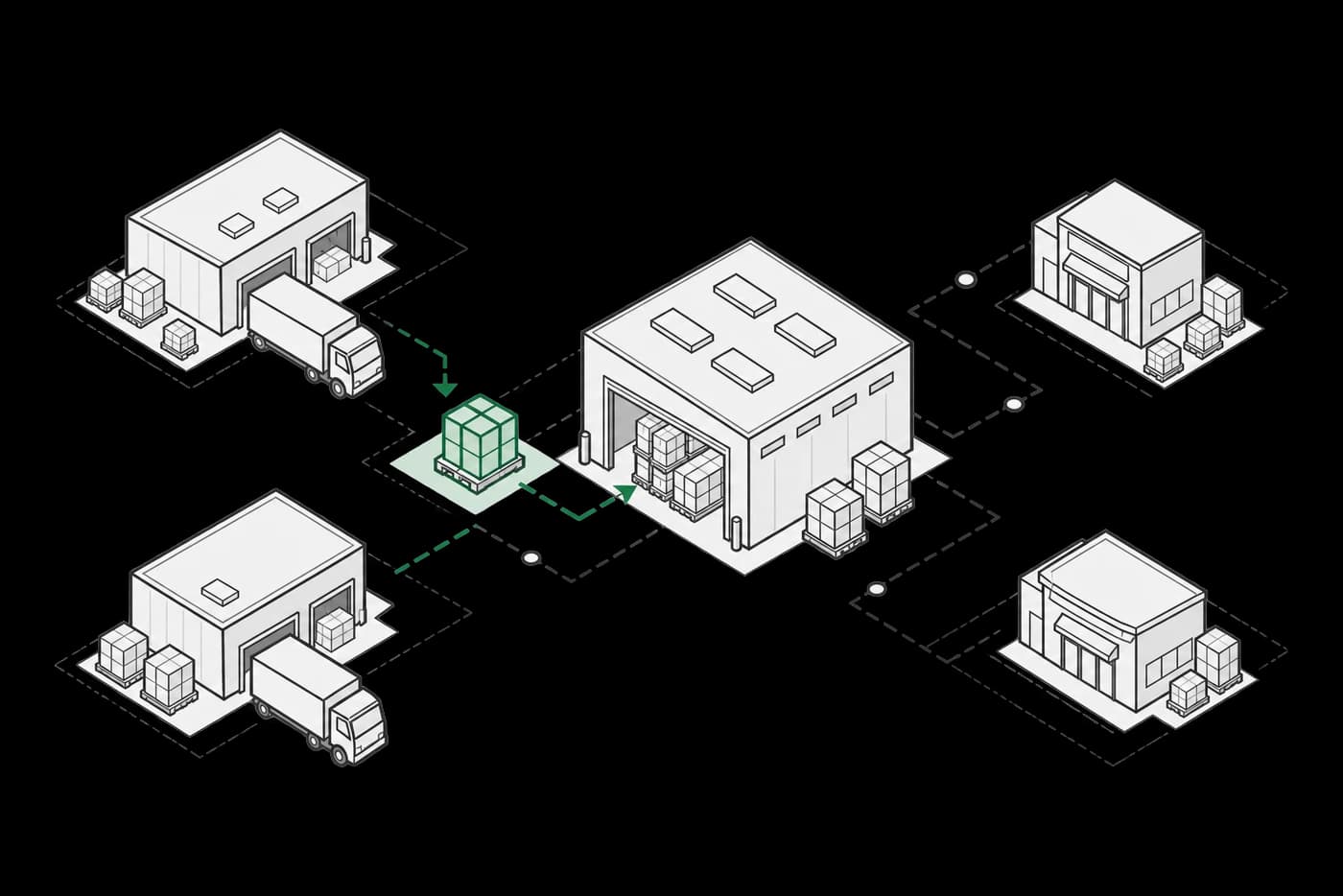
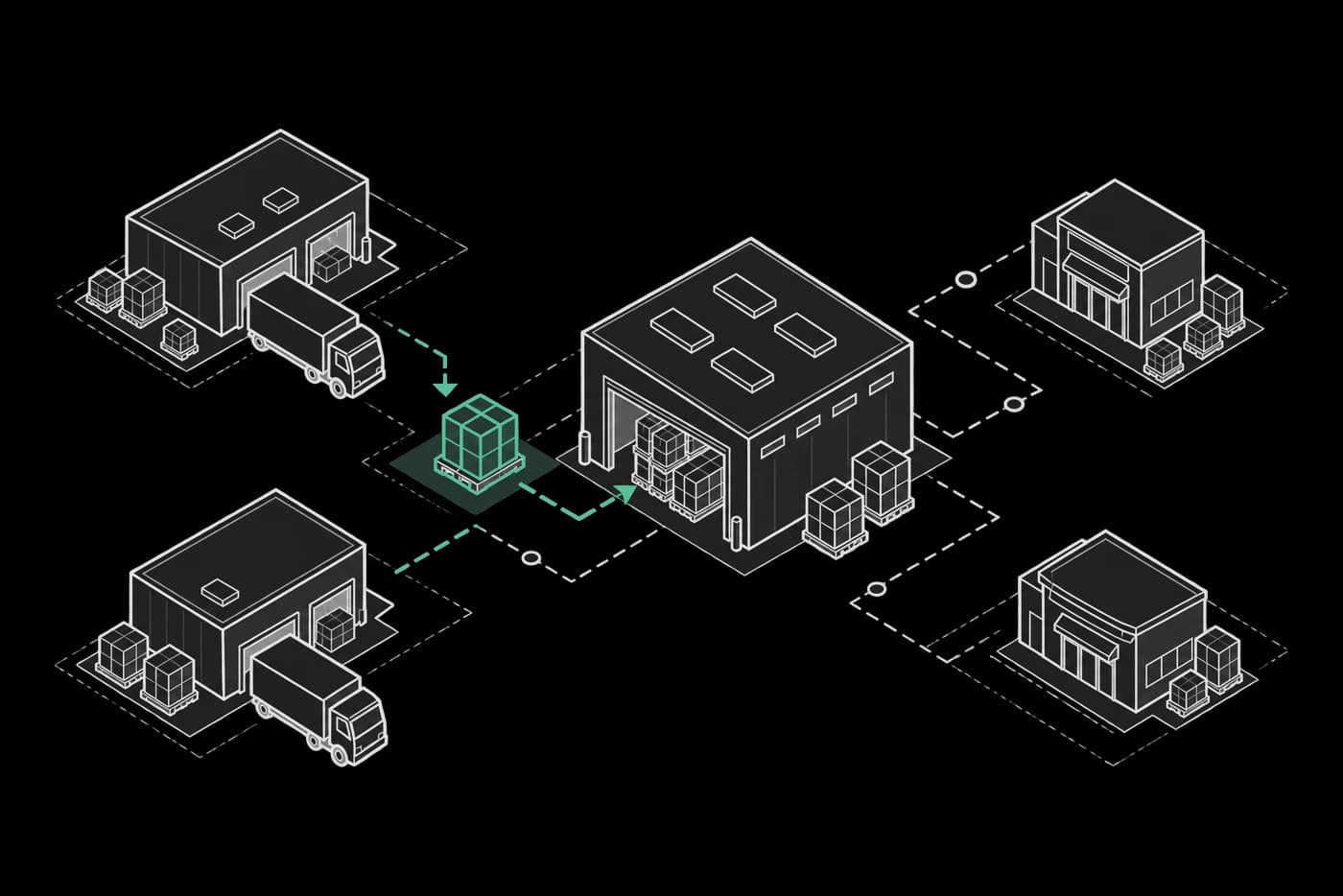
Three stages take every SKU from live stock visibility to an auto-sized replenishment order — factoring live positions, demand variability, lead time, and network surplus.
- 01
Track
Live stock — current, PO, SO, net — per SKU across every node (plants, CFAs, regional DCs, distributor warehouses). ROP and safety stock breach alerts fire the moment a threshold is crossed.
- 02
Calculate
Reorder points and safety stock recompute per SKU on demand history, criticality, lead time, and India variability: monsoon dips, festival buffers, and secondary sales offtake from CFA and distributor tiers. Before raising a PO, the engine checks whether network surplus covers the gap faster and cheaper.
- 03
Act
Replenishment quantities generated at ROP breach. Transfer recommendation raised first if surplus exists elsewhere; PO drafted and dispatched to WMS or ERP with procurement notification and audit trail.
Technical details · capabilities and constraints
- Live Multi-Location Stock Tracking
- Current, PO, SO, and net stock per SKU across every node — plant, CFA, regional DC, distributor — updated continuously. ROP and safety stock breach alerts fire on threshold.
- So you canSee the full network stock position in real time — not in yesterday's ERP extract.
- Dynamic Safety Stock Calibration
- Per-SKU safety stock on demand variability, service-level target, and lead time — not padded uniformly. Monsoon patterns, FMCG festival buffers, and CFA offtake fluctuations fold in automatically; recalibrates when variability shifts.
- So you canCarry the safety stock each SKU actually needs — and release capital trapped in uniform buffers on low-variability items.
- Transfer-Before-PO Network Balancing
- Before raising a PO, the engine scans every node for surplus covering the shortfall — transfer recommendation includes source, quantity, transfer cost, and a side-by-side against supplier PO cost and lead time.
- So you canRecover inventory value from stock at the wrong node — instead of buying more from a supplier.
- Automated Replenishment Order Generation
- Replenishment quantities calculate at ROP breach on current stock, open PO, forecast demand, and lead time — dispatched to WMS or ERP with procurement notification. Configurable: fully automatic on standard SKUs, approval-required on high-value items.
- So you canTake manual PO-raising off the planner's day — focus procurement review on the exceptions that need judgment.
- Non-Moving Inventory Detection
- SKUs with zero consumption across a configurable look-back (30/60/90 days) flagged network-wide. Total value quantified, open POs surfaced. Action workflow: redistribute, clearance, or hold.
- So you canAct on stuck inventory before it ages further — and stop buying more of what is not moving.
Auto replenishment planning — Constraints configured once, applied automatically
Stock Parameter Configuration
- Max stock and ROP per SKU or group
- Safety stock methodology — service-level target vs variability coefficient
- Lead time per supplier and per lane
- SKU criticality tier and associated service-level target
Network & Transfer Rules
- Transfer-before-PO threshold for transfer vs supplier order
- Eligible transfer-source nodes for multi-location balancing
- CFA and distributor stock norms per region
- Transfer cost per lane for cost-vs-PO comparison
Demand Variability & Seasonality Inputs
- Monsoon pattern adjustment by category and region
- FMCG festival buffer rules (Diwali, Eid, regional cycles) per SKU
- Secondary sales offtake source and refresh frequency
- Channel inventory norms for CFA and distributor tiers
Approval & Automation Configuration
- Auto-replenishment threshold (order value, SKU tier)
- Approval-required workflow for high-value or strategic items
- Procurement notification triggers and escalation rules
- Non-moving SKU look-back and action workflow
Ask your inventory replenishment platform anything — Caddie AI
Caddie reads your live stock — ROP breach alerts, transfer opportunities, non-moving inventory by location, replenishment order status — and answers in plain language.
From Network Imbalance to Corrected Stock — One Conversation
Caddie turns your live stock position — surpluses, deficits, non-movers, open POs — into corrective action across transfers, replenishment orders, and clearance.
SEE CADDIE + REPLENISHMENT PLANNING TOGETHER — Ask Caddie about your own stock backlog in a live demo →
What automated replenishment planning delivers for supply chain teams
0
Manual ROP recalculations in the standard replenishment cycle
20–35%
Reduction in stuck and non-moving inventory value
2×
Faster replenishment cycle from ROP breach to order release
0
Stockouts on fast-moving SKUs with live ROP monitoring active
Live
WMS and ERP sync on every replenishment order release
Ranges seen across Enmovil deployments · your KPIs are set against your own baseline
Case study · fmcg
Reducing stockouts 60–70% and cutting inventory holding cost 25–30% for a D2C health brand
Manual reality
BEFORE — Manual Stock Planning:
- Reorder points in Excel reviewed quarterly
- Stockout discovered by sales team via field call
- Emergency PO raised at premium
- Network imbalance goes undetected
- Working capital trapped in non-moving CFA stock
With Enmovil
AFTER — With Enmovil Replenishment Planning:
- Live ROP monitoring per SKU across all nodes
- ROP breach flagged immediately with transfer-first recommendation
- Transfer covers gap within 1 day; PO raised only where needed
- Network balancing identifies imbalance before a stockout
- Non-moving inventory flagged for clearance or redistribution automatically
The Operational Shift, Across Every Role
FOR INVENTORY PLANNERS
Live ROP and safety stock alerts per SKU replace the morning stock-check spreadsheet. Transfer recommendations surface before any new PO, non-moving inventory is flagged with the open PO list attached, and festival buffers calibrate themselves — no manual padding before every seasonal event.
FOR WAREHOUSE & FULFILMENT TEAMS
Replenishment orders land in the WMS directly — no manual transcription, no delay between decision and execution. Dispatch plans get stock availability and replenishment priority context, improving fill rates and lowering per-unit distribution cost.
FOR PROCUREMENT & FINANCE
POs validate against live stock, net projections, and transfer availability before release. Standard replenishment runs auto within thresholds; high-value items require approval. Working-capital exposure tracked continuously — not estimated from a monthly report.
FOR SUPPLY CHAIN LEADERSHIP
Network stock health, working-capital exposure by location and category, and service-level risk by criticality tier — available without pulling a report, drilldown from KPI to SKU. Caddie surfaces critical imbalances as an actionable briefing with transfer recommendations and PO flags.
Trusted by industry leaders


Industries served
See all industries →
ยานยนต์
Dispatch Planning

FMCG
Forecasting

ก่อสร้าง
Dispatch Planning

อุตสาหกรรมหนัก
Tracking & Visibility

ยา
Tracking & Visibility

น้ำมัน ก๊าซ และพลังงาน
Dispatch Planning

ไฟฟ้า
Tracking & Visibility

โทรคมนาคม
Dispatch Planning
What buyers ask us first.
Asked in discovery calls, answered plainly.
Enmovil's replenishment planning software is an AI-native inventory replenishment system that ingests live stock positions, distributor inventory norms, secondary sales offtake, and CFA stock norms across their network's distribution network — and produces automatically-sized replenishment orders with dynamic safety stock calibrated for Indian demand variability, monsoon and festival buffer requirements, and multi-echelon network balancing, posted directly to your WMS or ERP without manual calculation.
Adjacent supply chain modules
New to the topic? Read the guide: What is demand forecasting in supply chain?
วาง CADDIE ไว้บนระบบที่คุณใช้อยู่แล้ว
ไม่ต้องรื้ออะไรออก ฝากอีเมลที่ทำงานไว้ แล้วเราจะแสดง CADDIE บนการดำเนินงานจริงของคุณภายใน 15 นาที