AI Demand Forecasting Software India
Forecast what demand will consume. Not what was ordered last quarter.
Enmovil's demand forecasting tools are an AI-native forecasting engine that ingests distributor offtake data, secondary sales signals, GST e-invoice demand patterns, and region-specific seasonality inputs — including monsoon demand shifts and FMCG festival demand spikes — and produces SKU-level consumption forecasts with auto-calculated MOQ, ROP, ROQ, and safety stock parameters that planners can act on immediately.
See CADDIE answer itWhy sales-based demand forecasting fails at scale
Running on sales-based forecasts manually translated to stock parameters, you are one Diwali spike or monsoon dip away from a stockout your CFO did not see coming.
Forecasts predict orders, not consumption
Distributor offtake, secondary sales, and channel inventory norms never reach the model — so planners translate sales into stock decisions by hand, padding every buffer to compensate.
Stock parameters set once, then drift
MOQ, ROP, and safety stock get a quarterly ERP review at best. Monsoon dips and Diwali spikes make static parameters wrong until the cycle absorbs the error as a stockout.
Padded safety stock, not calibrated buffers
Without SKU-level forecast-error data, safety stock inflates across the catalogue — trapping 30% of working capital in inventory the demand variability does not warrant.
Forecasts that age before they are used
Monthly-snapshot forecasts can't react when secondary sales signal a mid-cycle shift. By the time the 20% variance shows, stock is already in the warehouse — and the correction is a write-down.
Enmovil's demand forecasting software replaces manual sales-based translation with a self-validating engine — real consumption signals in, six stock parameters out, driving every replenishment decision.
How demand forecasting tools work — Analyse. Predict. Output.
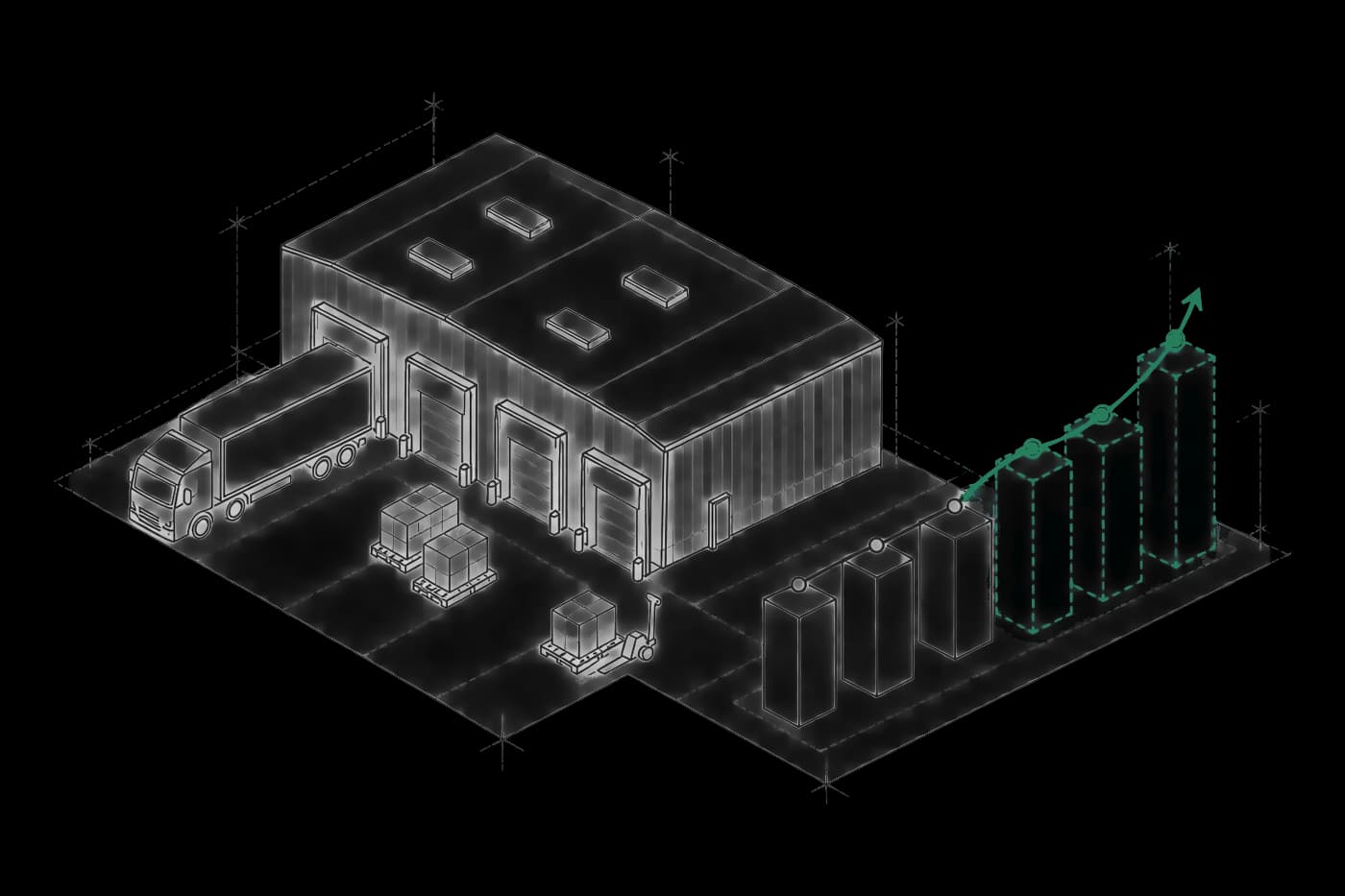
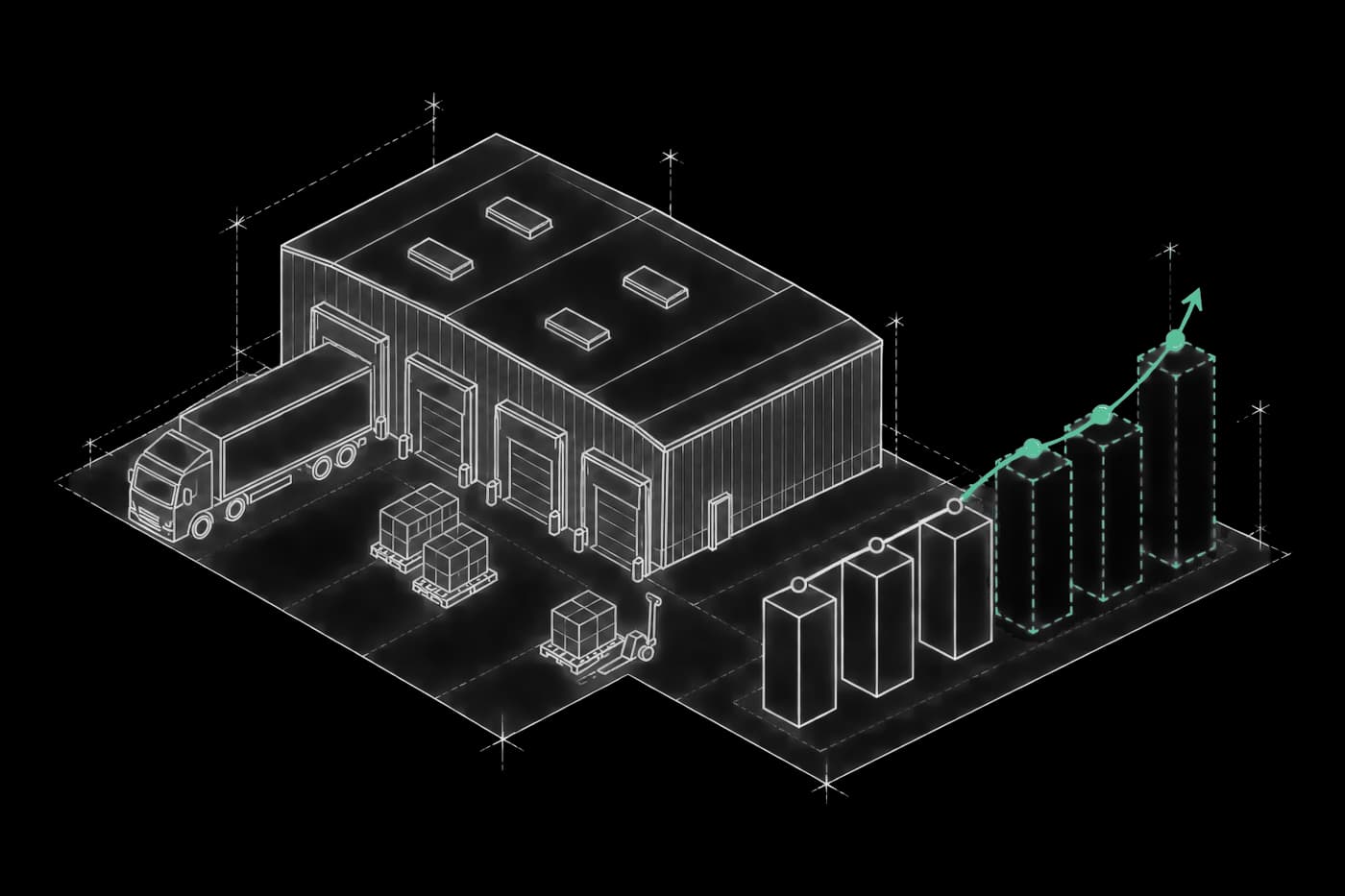
A three-stage pipeline: raw consumption signals in, self-validating ML forecast in the middle, six actionable stock parameters out.
- 01
Analyse
Per-SKU consumption data across distributor offtake, secondary sales velocity, channel inventory norms, GST e-invoice volumes, and region-specific seasonality — monsoon patterns and FMCG festival spikes included.
- 02
Predict
ML forecast for a configurable horizon, self-validated against accuracy targets before deployment. Outliers and structural demand shifts get flagged, not averaged away. MAPE tracked continuously at SKU, category, and portfolio level.
- 03
Output
Six stock parameters from the validated forecast — MOQ, ROP, ROQ, Max Stock, Min Stock, Safety Stock — recalculated when consumption or lead times cross a configurable threshold.
Technical details · capabilities and constraints
- Consumption-Signal Forecasting
- Per-SKU forecasts built on distributor offtake, secondary sales, GST e-invoice volumes, and historical consumption — not top-line sales orders. Lead-time changes factor in automatically.
- So you canForecast on actual market consumption — not on what was ordered before a distributor's inventory build.
- India Seasonality & Demand Pattern Detection
- Monsoon shifts, FMCG festival spikes (Diwali, Eid, regional harvest cycles), and automotive spare parts buffer-building detected per SKU. SKU-level overrides where item patterns differ.
- So you canBuild the right pre-festival buffer without a manual exercise — and release it when demand normalises.
- Self-Validating Forecast Accuracy
- Each forecast validates against a configurable MAPE target before deployment. SKUs outside the band get flagged with a root-cause hypothesis — intermittent demand, NPI, channel mix change.
- So you canSend planner judgment to the SKUs that need it — not spread it across the full catalogue.
- Six Auto-Calculated Stock Parameters
- MOQ, ROP, ROQ, Max, Min, and Safety Stock derived from the current forecast and supply constraints. Bulk-approve parameter updates across flagged SKUs in one action.
- So you canRetire the quarterly parameter review — get a continuous, forecast-driven update procurement can act on now.
- Procurement & Replenishment Handoff
- Recalibrated parameters push to inventory planning when changes cross the approval threshold. Procurement gets notified when ROP shifts affect open POs; full change log per SKU.
- So you canWire the forecast straight into procurement — no manual translation between teams.
Demand planning software — Constraints configured once, applied automatically
Forecast Model Configuration
- Planning horizon (weekly, monthly, rolling)
- MAPE accuracy target per SKU or category
- Model re-fit frequency on new observations
- Intermittent-demand detection and alternate model assignment
External Demand Signal Inputs
- Distributor offtake source and refresh frequency
- Secondary sales channel integration and normalisation
- GST e-invoice demand signal per category
- Festival and monsoon adjustment per SKU or category
Parameter Calculation Rules
- Safety stock methodology — service level vs demand variability
- ROP — forecast consumption × lead time + safety stock
- ROQ — order quantity against holding cost and order frequency
- Max/Min — working capital ceiling and fulfilment floor per criticality
Handoff & Approval Configuration
- Auto-update threshold (e.g. 10% parameter change)
- Bulk-approve workflow for batch parameter refresh
- Procurement notification triggers for open-PO impact
- Audit trail retention per parameter change
Ask your demand forecasting platform anything — Caddie AI
Caddie reads your live forecast — accuracy bands, parameter recalibration queues, consumption shifts, distributor offtake signals — and answers in plain language.
From Forecast Accuracy Gap to Recalibrated Parameters — One Conversation
Caddie wires live demand signals into the stock parameters behind every replenishment decision — no manual recalculation, no model-tuning session.
SEE CADDIE + DEMAND FORECASTING TOGETHER — Ask Caddie about your own forecast accuracy in a live demo →
What forecast-driven parameters deliver for supply chain & procurement teams
85–92%
Forecast accuracy on active SKUs
6
Stock parameters auto-calculated per SKU per cycle
0
Manual parameter resets on quarterly review calendar
0
Stockouts on SKUs with active ROP monitoring
Live
Parameter refresh on every forecast cycle
Ranges seen across Enmovil deployments · your KPIs are set against your own baseline
Case study · industrials
Scenario-driven demand forecasting and S&OP consensus for a global precision manufacturer
Manual reality
BEFORE — Sales-Based Manual Forecasting:
- Sales order-based demand forecast
- Planner manually translates to stock numbers
- ROP and Safety Stock entered in ERP
- Quarterly review (if scheduled)
- Drift between reviews causes stockouts or overstock
With Enmovil
AFTER — With Enmovil Demand Forecasting Tools:
- Consumption history and distributor offtake ingested
- ML forecast self-validates against accuracy target
- Six parameters auto-calculated and pushed to planning
- Parameters refresh on each forecast cycle
- Caddie alerts on pattern shifts before they become stockouts
The Operational Shift, Across Every Role
FOR INVENTORY & DEMAND PLANNERS
Forecast-derived ROP, ROQ, and safety stock replace manual ERP parameters. When a festival spike hits secondary sales, the model recalibrates — and planner attention goes only to SKUs outside the accuracy band.
FOR PROCUREMENT TEAMS
MOQ and ROQ give buyers a data-backed basis for order quantities sized to the current forecast. When a forecast shift affects an in-flight PO, procurement gets notified with the parameter change and open-PO impact.
FOR SUPPLY CHAIN & OPERATIONS LEADERS
Consumption forecasts flow straight into replenishment and dispatch sizing — no manual translation between teams. Working-capital exposure from over-padded safety stock gets quantified at portfolio level.
FOR SUPPLY CHAIN LEADERSHIP & CFO
Forecast accuracy, parameter drift, and working-capital exposure tracked at network level with SKU drilldown — making the link between MAPE improvement and capital release explicit and measurable.
Trusted by industry leaders


Industries served
See all industries →
Motoryzacja
Dispatch Planning

FMCG
Forecasting

Budownictwo
Dispatch Planning

Przemysł
Tracking & Visibility

Farmacja
Tracking & Visibility

Ropa, gaz i energia
Dispatch Planning

Elektrotechnika
Tracking & Visibility

Telekomunikacja
Dispatch Planning
What buyers ask us first.
Asked in discovery calls, answered plainly.
Enmovil's demand forecasting tools are an AI-native forecasting engine that ingests distributor offtake data, secondary sales signals, GST e-invoice demand patterns, and region-specific seasonality inputs — including monsoon demand shifts and FMCG festival demand spikes — and produces SKU-level consumption forecasts with auto-calculated MOQ, ROP, ROQ, and safety stock parameters that planners can act on immediately.
Adjacent supply chain modules
New to the topic? Read the guide: What is demand forecasting in supply chain?
Postaw CADDIE nad tym, czego już używasz.
Niczego nie wymieniasz. Zostaw służbowy e-mail, a pokażemy Ci CADDIE na Twojej własnej operacji – w 15 minut.