Introduction
A container sits at the terminal with its detention clock already running, and the finance team only learns about the charge when the invoice lands weeks later. A finished-goods truck completes its delivery, but the signed paper proof of delivery takes three days to reach the invoicing desk. A distribution planner builds tomorrow's dispatch schedule from yesterday's inventory snapshot, because the warehouse system update hasn't synced yet.
These moments keep surfacing in conversation after conversation with supply chain, logistics, and quality leaders across paints, industrial equipment, automotive, and cement manufacturing. The common thread: import, warehouse, and outbound distribution systems rarely share a live picture of what's happening and that gap costs far more than most budgets account for.
The Pattern Showing Up in Recent Conversations
Import and customs visibility
● Fixed clearance windows (commonly 40–48 hours) where terminal-level container status, detention start times, and document-signing progress determine whether extra charges apply.
● Single-forwarder dependency that leaves pricing, scheduling, and service comparisons opaque, making it hard to benchmark rates or catch delays early.
● Vendor invoices and customs documentation still entered into ERPs manually, slowing reconciliation and finance close.
Outbound distribution and dispatch planning
● Distribution networks spanning dealer and depot locations that need a 360-degree view of stock, in-transit shipments, and dwell time to plan effectively.
● Load-building for oversized, fragile, or high-volume SKUs still handled through manual judgment rather than configurable rules.
● Multiple proof-of-delivery paths required depending on product type spare parts, finished goods, and dealer-confirmed deliveries each carry different verification needs.
Carrier and forwarder communication
● Pooled or outsourced fleets where empty backhaul and idle truck time stay invisible across multiple transport partners.
● Driver and vehicle safety signals (hard braking, night driving, route deviation) tracked inconsistently or not captured at a central level.
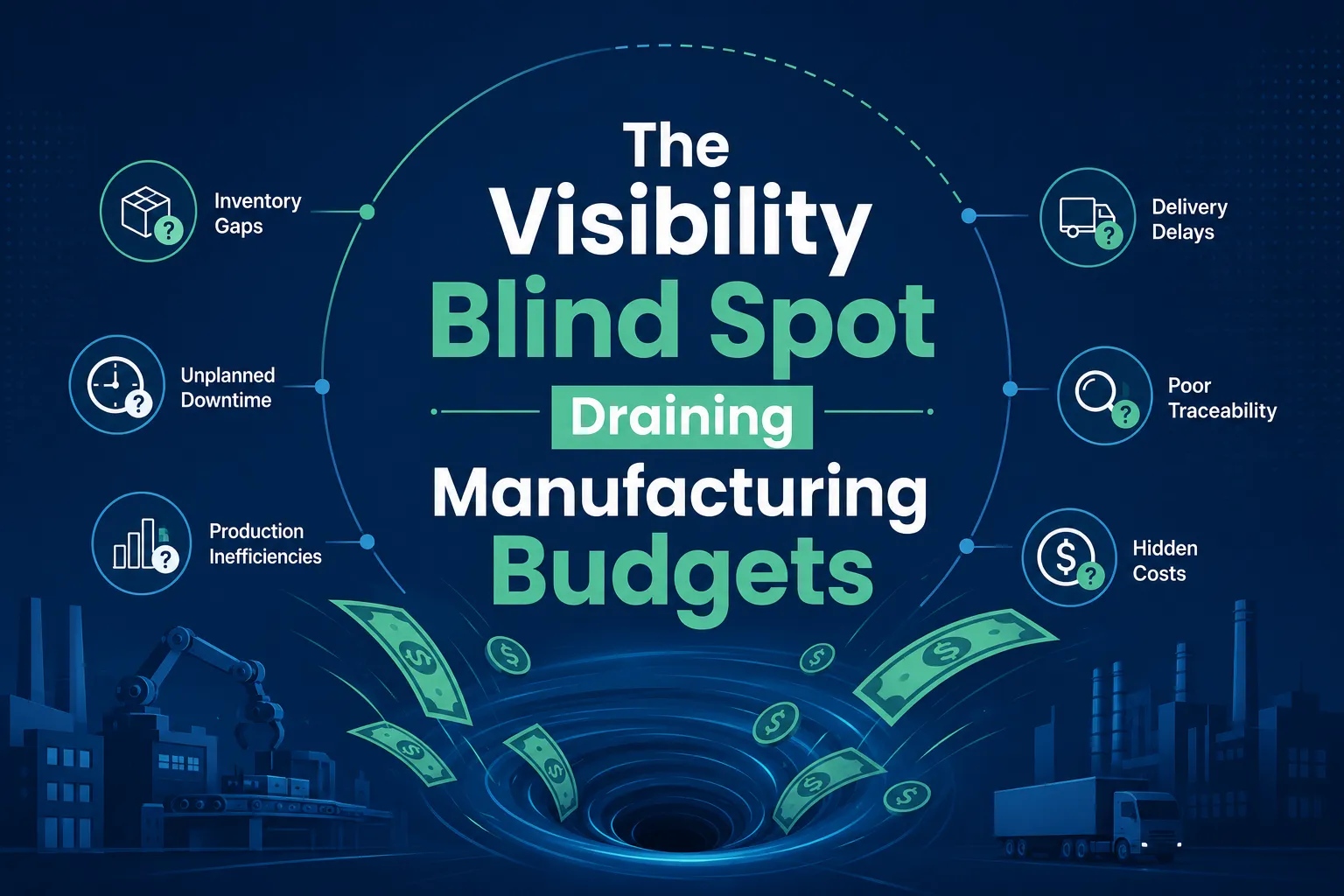
What This Actually Costs
● Detention and demurrage charges that accumulate because terminal free-time isn't tracked and flagged in advance.
● Delayed finance close, as manually keyed invoices and documents work through reconciliation.
● Idle or underused fleet capacity, when pooled carriers and backhaul opportunities go unseen.
● Dealer and distributor disputes over delivery timing, when proof-of-delivery arrives late or in a format that doesn't match the product's verification needs.
● Compliance and safety exposure, when driver behavior data lives in disconnected systems instead of a central dashboard.
What Leading Manufacturers Are Doing About It
1. Unified import and EXIM dashboards
Aggregating ETD/ETA, gate-in/gate-out status, and terminal free-time alerts into a single view, so a detention window becomes visible days before it becomes a charge.
2. Automated forwarder and RFQ management
Sending RFQs to multiple registered forwarders, collecting and comparing bids, and removing the pricing opacity that comes with a single-forwarder relationship.
3. Digital, multi-path proof-of-delivery
Matching the verification method, OTP, geofenced check-in, or image capture to the product and delivery context, so finished goods, spare parts, and dealer deliveries each get the right level of confirmation.
4. Pooled carrier and backhaul optimization
Surfacing idle trucks and empty-leg opportunities across a shared carrier network, turning underused capacity into planned, revenue-generating trips.
5. Centralized driver and vehicle safety monitoring
Bringing hard-braking, night-driving, and route-deviation alerts into one dashboard, so safety and compliance sit alongside delivery performance rather than in a separate system.
Conclusion
The gap between import, warehouse, and distribution systems rarely announces itself as a single, visible failure, it shows up as a detention invoice here, a delayed dealer confirmation there, an underused truck somewhere else. Bringing these signals into one live view turns a set of scattered, reactive fixes into a proactive, measurable operation.
FAQ's
What causes visibility gaps in supply chain and logistics operations?
How do container detention and demurrage charges typically get missed?
What is a logistics control tower?
How long does it typically take to implement supply chain visibility software?
Does closing these visibility gaps require replacing existing ERP or WMS systems?
Share this article