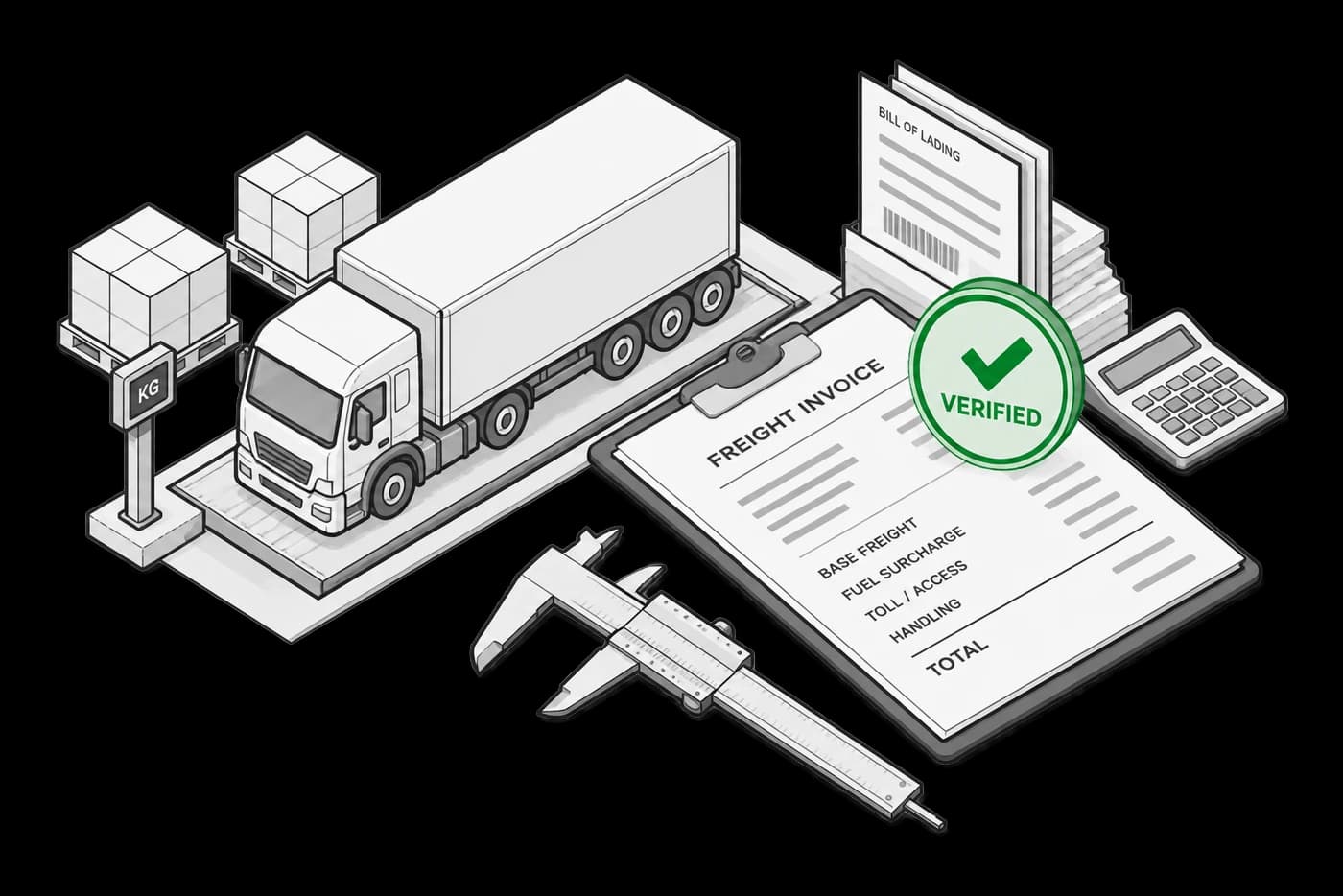
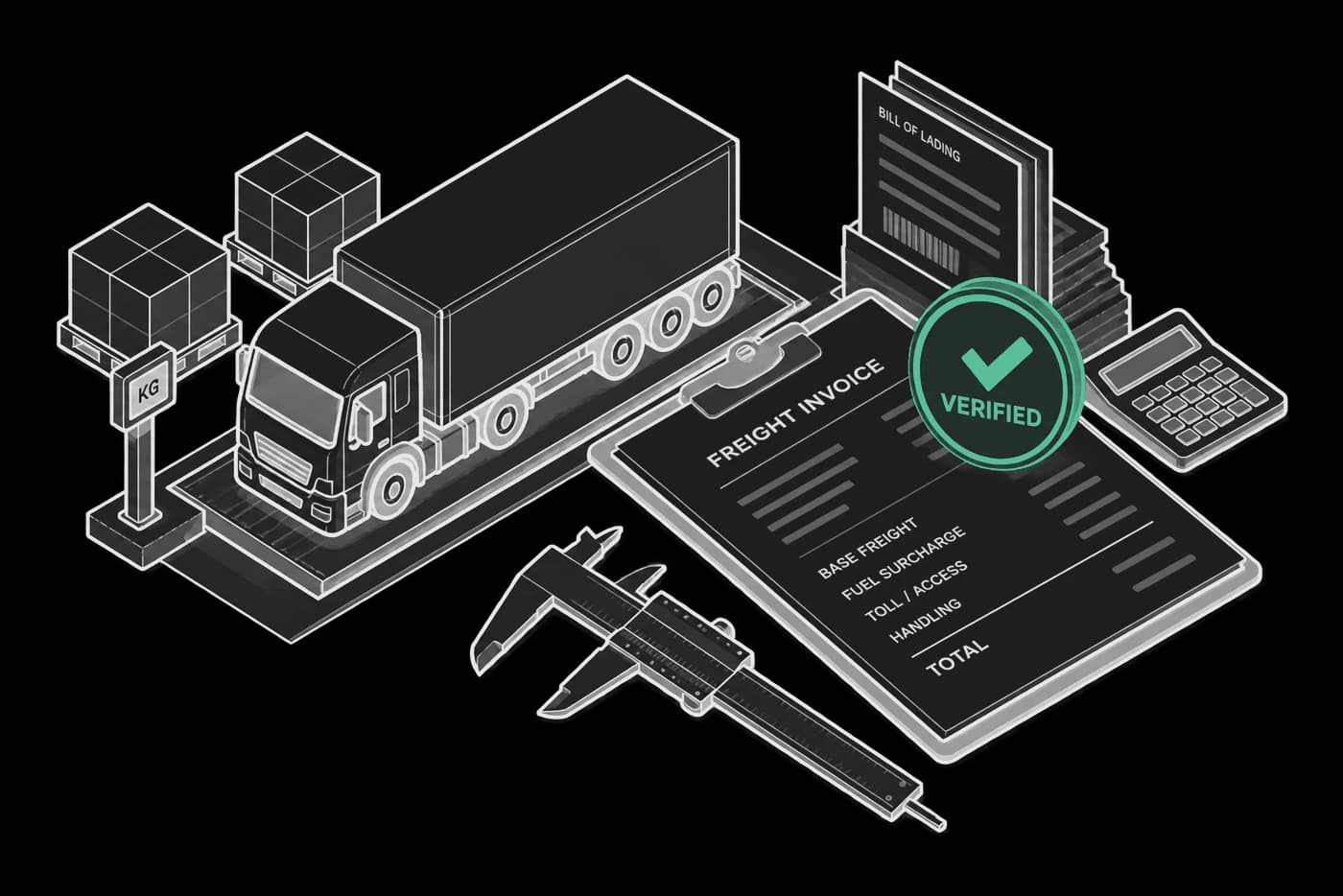
How freight audit and payment works
Each freight bill is matched to the shipment it covers, the rate contract that applies and the proof that the delivery happened. Charges such as fuel surcharge, tolls, detention and penalties are recalculated and compared with the invoice.
Bills that match are approved and posted to the ERP for payment. Bills that do not are flagged with the reason, sent back to the carrier or routed for approval.
What a freight audit checks
A thorough audit looks at more than the base rate.
- Rate. The correct contracted rate for the lane, vehicle type and date.
- Fuel surcharge. Diesel price changes applied with the agreed method and source.
- Accessorials. Tolls, loading, detention and multi-drop charges backed by evidence.
- Delivery proof. A confirmed delivery record, with shortages or damage noted.
- Duplicates. The same trip or invoice billed more than once.
- Tax. Correct GST treatment and deductions such as TDS where they apply.
Benefits of automating freight audit
Manual audits sample a few bills and leave the rest unchecked. Automation checks every bill against the same rules, shortens the billing cycle and gives finance a reason for every deduction. Transporters benefit too: they see how each charge was calculated and get paid sooner, which matters for MSME transporters with statutory payment timelines.
Common challenges
Frequent fuel price revisions can change many in-progress bills at once. Proof of delivery often arrives late or on paper. Penalty and waiver decisions made over email leave no record. And when rate contracts live in spreadsheets, different teams apply different versions.
How to choose freight audit software
Choose software that holds your rate contracts and surcharge rules centrally, links bills to delivery confirmation, and posts approved invoices to your ERP. Check that every adjustment is logged with who approved it. For India, look for GST-compliant invoicing, TDS handling and e-way bill reconciliation.
Enmovil
How Enmovil approaches freight audit and payment
Enmovil’s Freight Settlement module runs three stages: confirm and capture delivery proof through ePOD, API or client OTP; verify and adjust using rate rules for IOCL/HPCL diesel revisions, FASTag toll via ULIP and configured deviation formulas; then close and post a GST-compliant invoice with TDS Section 194C applied to the ERP. E-way bill records are matched against the confirmed route and delivery.
CADDIE, Enmovil’s AI agent, reads live billing data, shows which bills are stuck and why, and can send POD reminders to transporters, with every action logged.
Frequently asked questions
What is the difference between freight audit and freight payment?
Freight audit is the checking step: comparing each carrier invoice with the contracted rate, surcharges, accessorial charges and delivery proof to find errors. Freight payment is the settlement step: approving valid bills, posting them to the accounting system and paying the carrier. Most companies run them as one process so that only audited bills are paid.
Why do companies audit freight invoices?
Companies audit freight invoices because carrier bills often contain errors such as wrong rates, outdated fuel surcharges, duplicate charges or charges for services not delivered. An audit catches these before payment, gives finance a clear reason for each deduction and produces data on transporter performance that helps in future rate negotiations.
How is fuel surcharge handled in freight audit?
In freight audit, fuel surcharge is recalculated from the diesel price source and method agreed in the rate contract, such as a percentage or fixed amount per change in price. In India, contracts often reference IOCL or HPCL diesel prices. Automated audit applies each revision to the bills it affects, so the surcharge does not have to be updated by hand.
What documents are needed for freight audit in India?
Freight audit in India typically uses the transporter invoice, the lorry receipt (LR), proof of delivery, the applicable rate contract and the e-way bill for the consignment. Toll records, fuel price references and approval records for penalties or waivers support specific charges. The invoice also needs correct GST details, and TDS may apply on payment.
Can freight audit and payment be fully automated?
Most of freight audit and payment can be automated: matching bills to shipments, applying rates and surcharges, checking delivery proof, generating invoices and posting to the ERP. Exceptions such as disputed deductions or penalty waivers still need a person, but automation routes them through a defined approval path and records each decision for audit.