How dispatch planning works
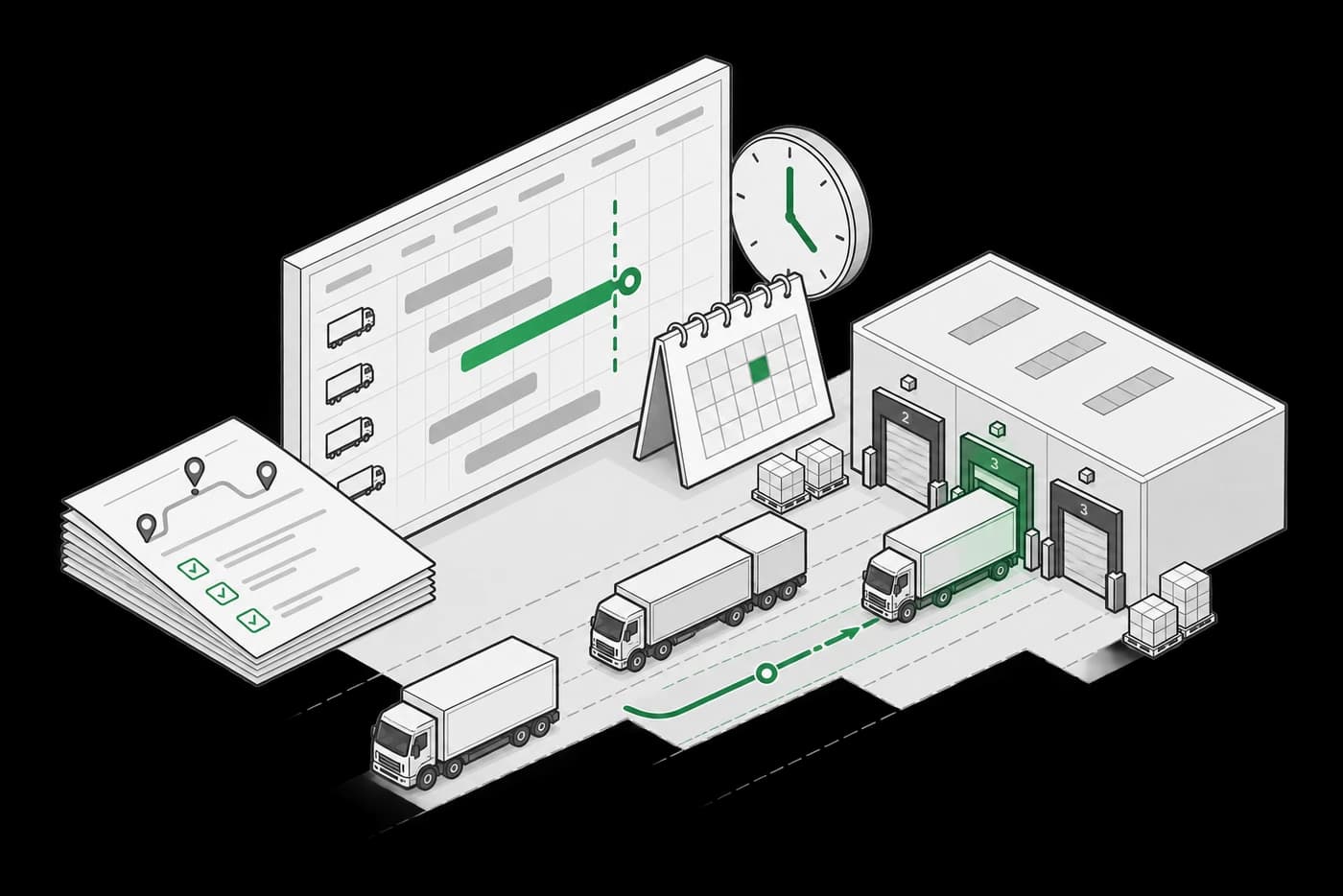
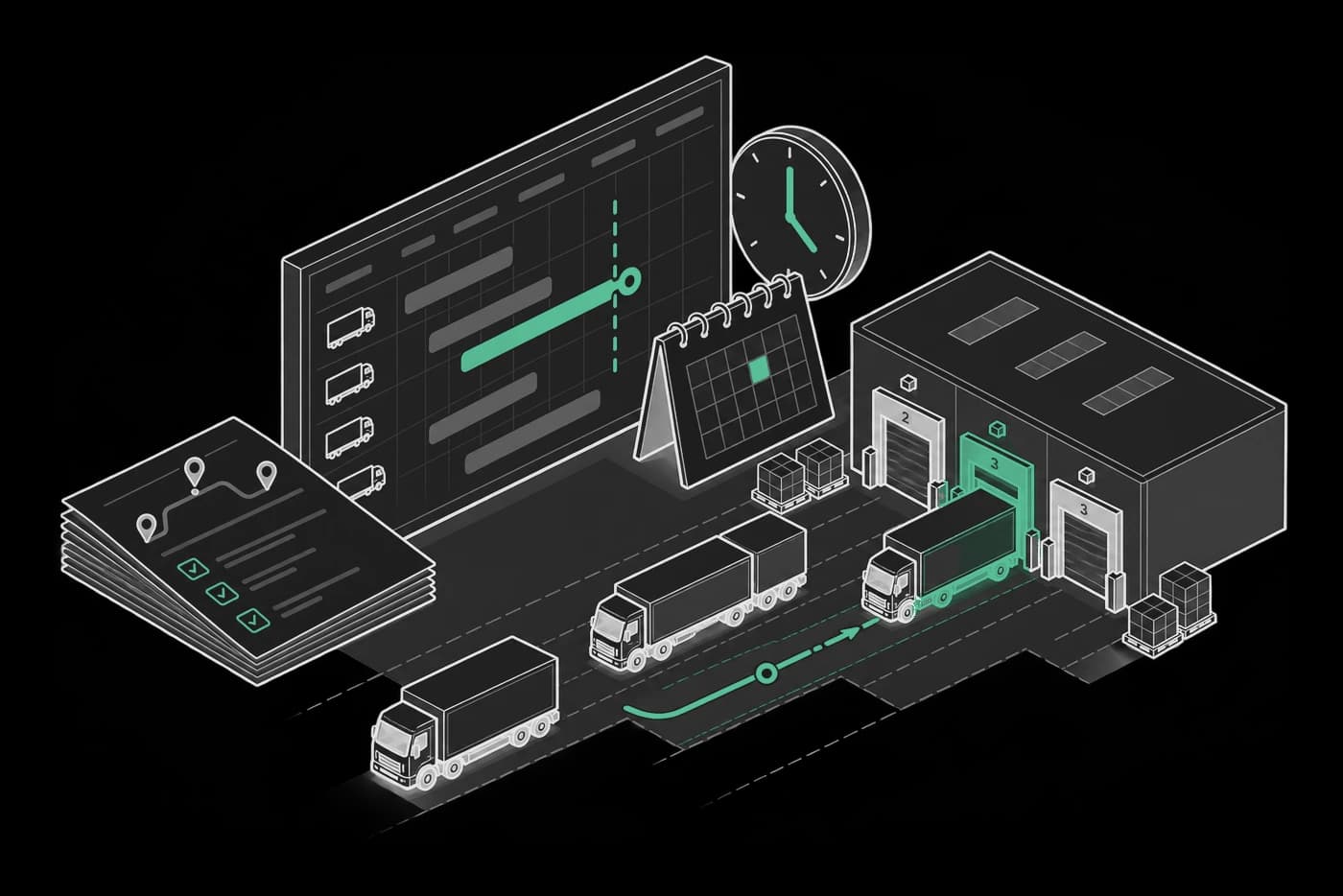
Each day, planners take the orders due to ship, the vehicles available and the rules that apply, and decide which orders travel together, on what vehicle type, from which plant or depot and at what time. The plan has to respect weight and volume limits, customer delivery windows, product compatibility and driver hours.
Route optimization then sequences the stops on each trip to reduce distance, time and cost.
Key decisions in a dispatch plan
A good plan balances several decisions at once rather than one at a time.
- Vehicle assignment. Which truck type and transporter carries each load.
- FTL or PTL. Whether to ship a full truck or combine part loads.
- Load building. How goods fit in the vehicle by weight, volume and drop order.
- Stop sequence. The order of deliveries on a multi-drop route.
- Departure timing. Slots that fit dock capacity and customer receiving windows.
Benefits
Optimized dispatch plans usually need fewer trips for the same volume, because vehicles leave fuller and routes are shorter. Planners can compare several feasible plans by freight cost instead of settling for the first one that works. Customers get more reliable delivery windows, and the plan is ready earlier in the day.
Common challenges
Orders often arrive late or change after the plan is made. Constraints live in planners’ heads rather than in a system. Fleet availability, especially for market-hired trucks, is uncertain. And in multi-depot networks, the best plan for one plant can be poor for the network as a whole. Indian highway corridors add variable transit times and vehicle-type restrictions.
How to choose dispatch planning software
Check that it models your real constraints, including vehicle types, dock windows, product mix and customer rules, and that planners can see why a plan was chosen. Ask whether it compares several plans by cost, links to load building and dispatch scheduling, and sends the final plan to your TMS or ERP for execution.
Enmovil
How Enmovil approaches dispatch planning and route optimization
Enmovil’s Dispatch Planning, part of its Plan engine, provides AI-driven vehicle assignment and route sequencing. It takes daily indents, live fleet availability and plant dispatch windows and generates several optimized dispatch plans with truck allocations, FTL/PTL split decisions, route sequences and freight cost comparisons, ready for execution across multi-depot outbound operations.
It works alongside 3D Load Building for cube-aware loading, Fleet Sizing for matching the fleet to demand, and Dispatch Scheduling for plant-level slots. CADDIE, Enmovil’s AI agent, lets planners query and adjust plans by chat or voice.
Frequently asked questions
What is the difference between dispatch planning and route optimization?
Dispatch planning decides which orders ship together, on which vehicle and transporter, and when they leave. Route optimization decides the order of stops and the path each vehicle takes once its load is set. They are closely linked, because the best grouping of orders depends on the routes available, so modern tools solve them together.
What constraints does dispatch planning consider?
Dispatch planning considers vehicle capacity by weight and volume, available vehicle types and transporters, customer delivery windows, plant and dock loading slots, product compatibility, driver working hours and any route restrictions. Cost factors such as freight rates, full versus part truckload pricing and multi-drop charges are also weighed to choose the cheapest feasible plan.
How does route optimization reduce logistics costs?
Route optimization reduces logistics costs by finding shorter, faster stop sequences and by grouping deliveries so that fewer vehicles are needed for the same volume. That cuts distance, fuel, tolls and driver time. Combined with load building, it also raises vehicle utilisation, so each trip carries more goods and fewer trips are booked.
What is FTL and PTL in dispatch planning?
FTL means full truckload, where one shipment or customer fills a vehicle and it travels directly. PTL means part truckload, where several smaller shipments share a vehicle, often with multiple pickups or drops. Dispatch planning decides when combining orders into a shared PTL trip is cheaper than sending separate FTL vehicles, within delivery-time limits.
Can dispatch planning be automated?
Yes. Dispatch planning software can automatically build plans from the day’s orders, vehicle availability and constraints, and compare several options by cost. Planners remain responsible for reviewing and approving the plan and for handling last-minute changes, but they no longer build each truck plan by hand in a spreadsheet.