How yard management and dock scheduling work
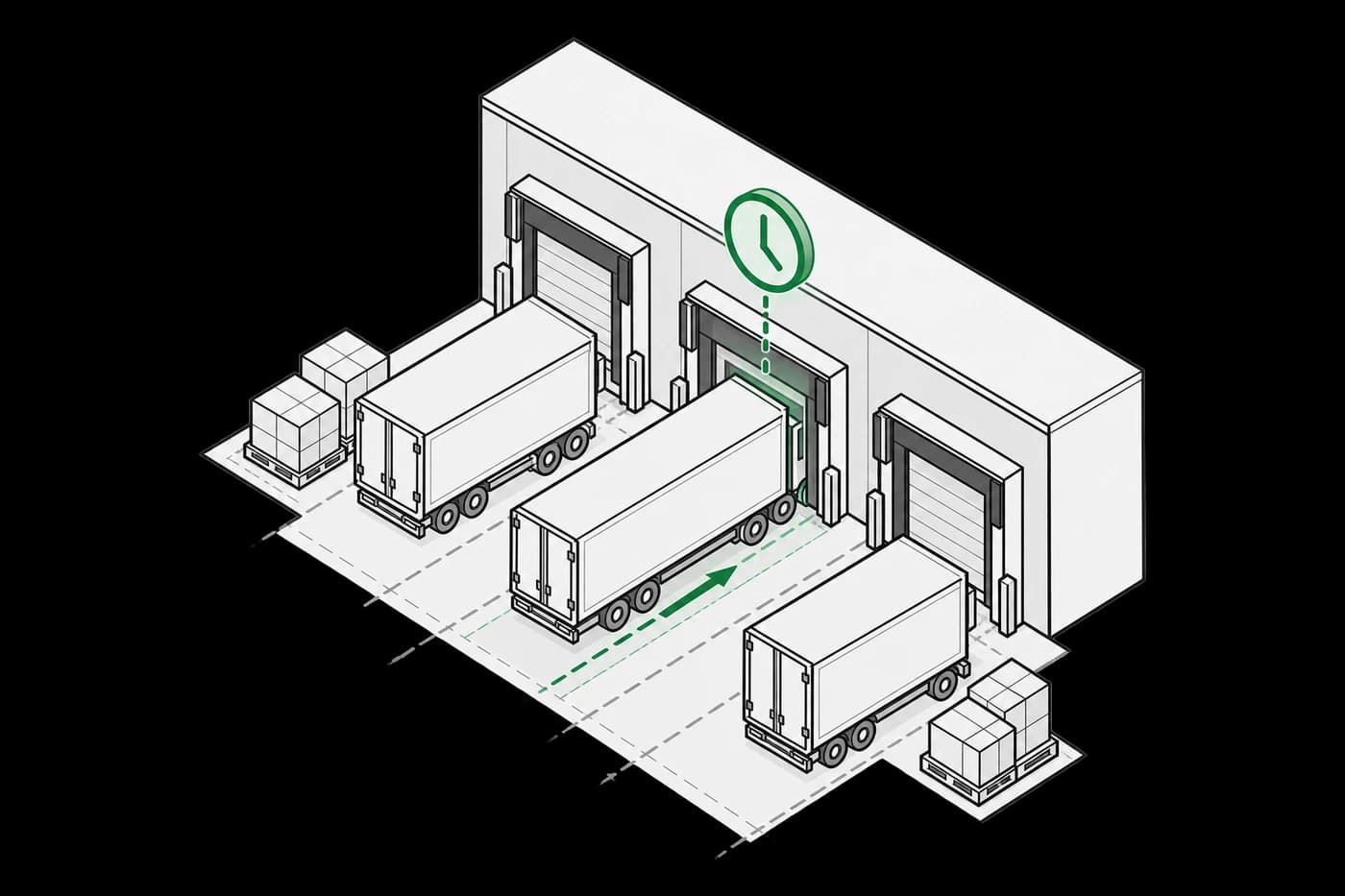
A vehicle is booked into a slot before it arrives. At the gate, it is checked in against its documents and assigned a parking position or a dock bay. When the bay is free, it is called forward, loaded or unloaded, weighed if needed and checked out.
Throughout, the system records timestamps, so dwell time, queue length and bay utilisation can be measured rather than guessed.
Key capabilities
Most systems cover the same steps of a vehicle’s visit.
- Slot booking. Carriers and suppliers book inbound and outbound time slots in advance.
- Gate check-in. Vehicle, driver and documents verified on arrival.
- Bay assignment. Docks allocated by load type, priority and equipment.
- Yard visibility. Where each vehicle is waiting and for how long.
- Turnaround tracking. Gate-in to gate-out time per vehicle, carrier and shift.
Benefits
Scheduling spreads arrivals across the day, so docks are not congested in the morning and idle in the afternoon. Shorter vehicle turnaround reduces detention charges and lets the same fleet do more trips. Inbound parts reach the line in the right order, and outbound loads leave in time to meet their dispatch windows.
Common challenges
Arrivals rarely match bookings, so schedules must adapt in real time. Inbound and outbound often share bays without a single view of both. Gate checks, weighbridge readings and document validation can each become a bottleneck. In automotive plants running JIT or JIS supply, a single missed inbound slot can stop a production line.
How to choose a yard and dock scheduling system
Check that it covers both inbound and outbound, connects to your WMS and dispatch plan so slots follow real loads, and integrates gate and weighbridge data. Look for live re-scheduling when vehicles arrive early or late, and for turnaround and dwell reporting by transporter and shift.
Enmovil
How Enmovil approaches yard management and dock scheduling
Enmovil’s Dispatch Scheduling is a plant-level module that takes planned orders and live fleet availability and produces an execution-ready schedule with vehicle allocation, dock bay assignment, loading sequence and gate-in and gate-out timing, with weighbridge integration across plants and distribution centres. Its Warehouse Management software logs vehicles at the gate against the ASN and e-way bill and allocates the bay and dock.
Dispatch Planning sequences inbound deliveries to match production schedules, so parts arrive in the right order at the right dock. CADDIE, Enmovil’s AI agent, answers questions about live yard and dock status by chat or voice.
Frequently asked questions
What is the difference between yard management and dock scheduling?
Yard management controls everything that happens to a vehicle on site, from gate check-in and parking to movement and gate-out. Dock scheduling is one part of it: allocating loading and unloading bays to vehicles by time slot. A yard management system usually includes dock scheduling, but dock scheduling can also be used on its own.
What is dock dwell time?
Dock dwell time is how long a vehicle spends at a site, often measured from gate-in to gate-out or from arrival at the dock to departure. Long dwell times signal congestion, poor scheduling or slow loading, and they raise costs through detention charges and lost vehicle trips. Reducing dwell time is a common goal of dock scheduling.
How does dock scheduling reduce detention charges?
Dock scheduling reduces detention charges by giving each vehicle a planned slot and a bay, so trucks spend less time waiting to be loaded or unloaded. Spreading arrivals across the day avoids peaks that overwhelm docks, and live re-scheduling handles early or late arrivals. Shorter waiting means fewer hours billed by transporters as detention.
Does yard management integrate with a WMS?
Yes, yard management usually integrates with a warehouse management system. The WMS knows which orders and goods are ready, and the yard system knows which vehicles are on site and where. Connecting them means bays are allocated to loads that are actually ready and inbound receipts are expected when the vehicle checks in at the gate.
Who uses yard management and dock scheduling?
Yard management and dock scheduling are used by manufacturing plants, warehouses, distribution centres and cross-docks that handle many vehicles a day. They matter most where docks are a bottleneck, such as automotive plants with just-in-time inbound supply, FMCG distribution centres with high outbound volumes and sites shared by many transporters.