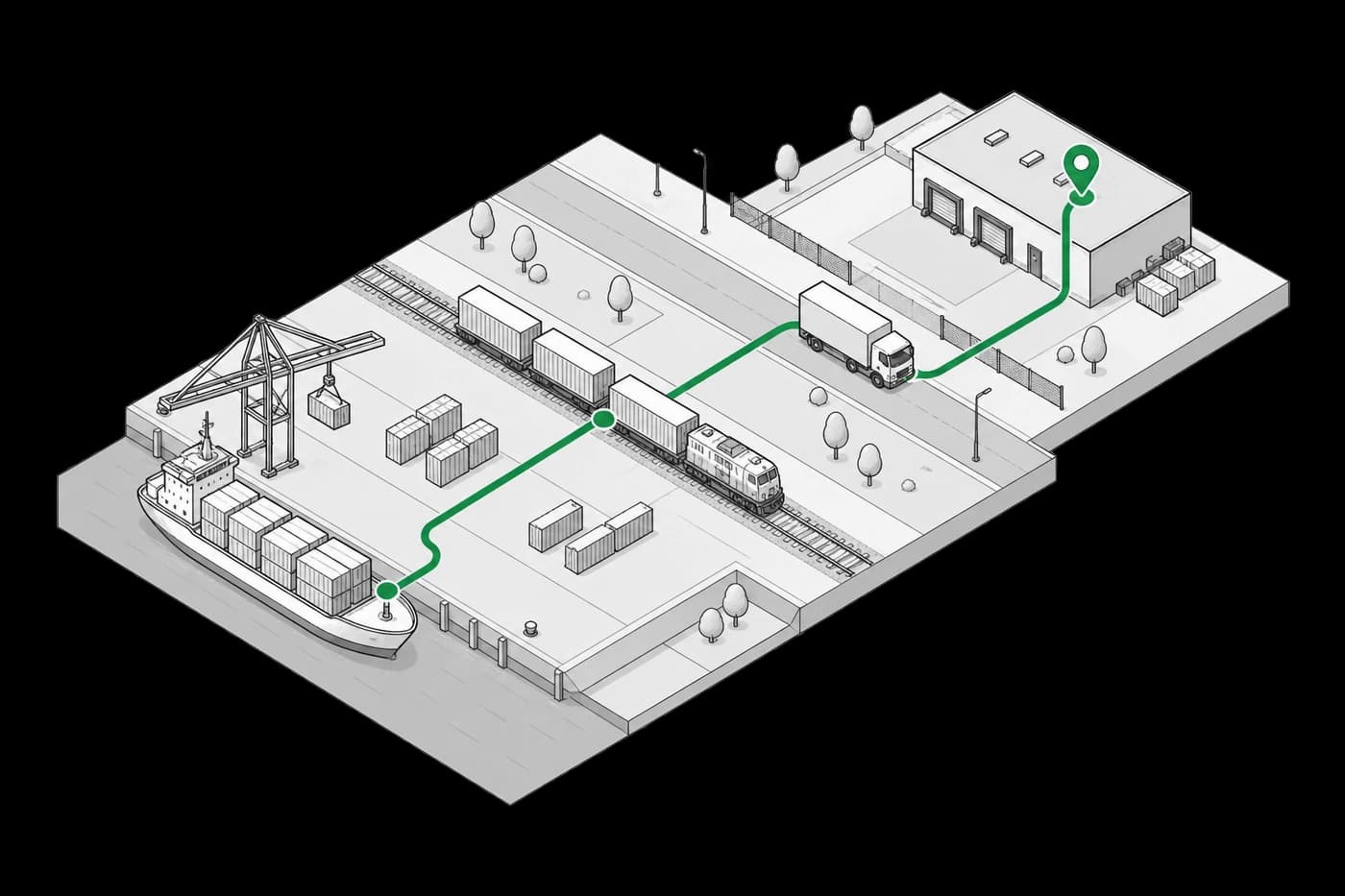
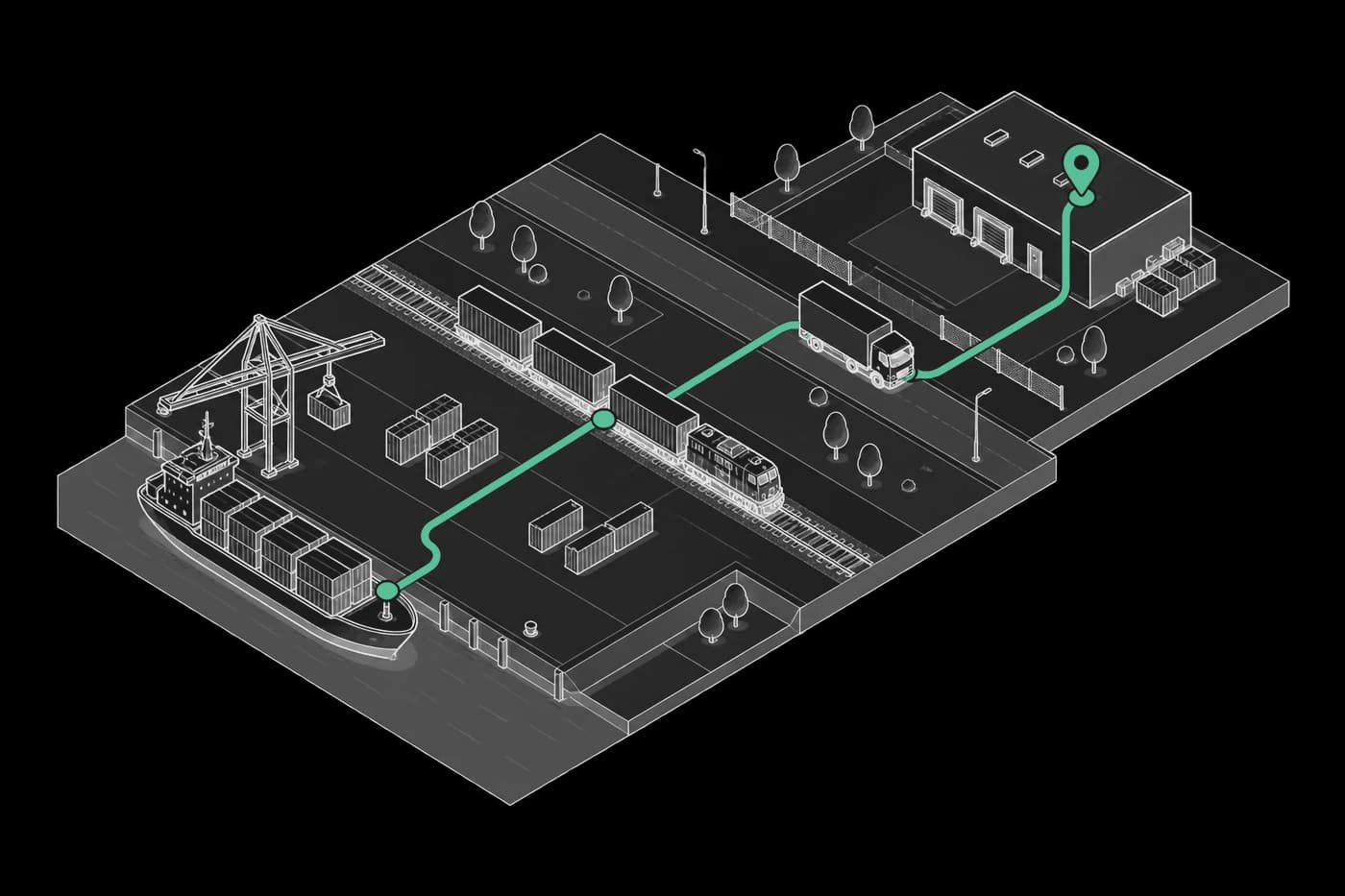
How a control tower works
A control tower pulls tracking data from GPS devices, driver apps, carrier systems, rail and port milestones and the TMS, and matches it to orders. It compares actual progress with the plan, predicts arrival times and raises an alert when a shipment is likely to miss its window.
The team or system then acts on the exception: informing the customer, re-routing, expediting or replanning the next load.
Logistics control tower vs supply chain control tower
A logistics control tower focuses on freight movement: trips, carriers, ETAs, dwell and proof of delivery. A supply chain control tower covers a wider scope, linking transport with demand, inventory, production and suppliers so that a delay can be judged by its effect on stock and customer orders.
Many companies start with logistics and widen the scope over time.
Key capabilities
A useful control tower does more than plot dots on a map.
- Multi-modal tracking. Road, rail, ocean and air shipments in one view, matched to orders.
- Predictive ETAs. Arrival times that update as conditions change, not just a planned date.
- Exception alerts. Delays, route deviations, long halts and missed milestones raised automatically.
- Carrier performance. On-time, dwell and compliance data per transporter for reviews.
- Proof of delivery. Delivery confirmation captured digitally and linked to billing.
Common challenges
Tracking coverage is often the first hurdle, especially with many small transporters and market-hired vehicles. Data from different sources arrives in different formats and at different speeds. And alerts without clear owners create noise rather than action. In India, linking road data such as FASTag with rail and port milestones is a common requirement.
How to choose a control tower
Look for coverage of every mode and transporter type you use, ETA predictions that learn from your lanes, and alerts routed to named owners. Check that it connects to your ERP and TMS so exceptions are tied to orders, and that delivery confirmation flows through to freight settlement.
Enmovil
How Enmovil approaches the logistics control tower
Enmovil’s Control Tower is one live view across every shipment, carrier and mode, part of its Execute engine alongside ETA Prediction, Risk Management, ePOD and Freight Settlement. Its tracking and visibility software brings FOIS rail tracking, FASTag road data via ULIP, container milestones and air cargo updates into a single operations view with predictive ETAs and proactive exception alerts.
CADDIE, Enmovil’s AI agent, reads that live data and answers questions in plain language, tracing a delay to the plants and customers it affects and recommending the next step.
Frequently asked questions
What does a logistics control tower do?
A logistics control tower tracks shipments across carriers and modes in one place, predicts arrival times, and raises alerts when a shipment is delayed, off route or stuck. It then helps the team respond, for example by informing the customer, re-routing a vehicle or replanning the next dispatch, and records performance data for each transporter.
What is the difference between a logistics and a supply chain control tower?
A logistics control tower focuses on the movement of goods: trips, carriers, ETAs and delivery. A supply chain control tower covers a wider scope, connecting transport data with demand, inventory, production and supplier data, so that the impact of a delay on stock levels and customer orders can be assessed and managed end to end.
Is a control tower software or a team?
A control tower is usually both. The software collects tracking and order data, predicts ETAs and raises exceptions. A team, sometimes central and sometimes regional, owns the response to those exceptions and works with transporters and customers. As software takes on more of the analysis and routine actions, the team can focus on harder cases.
What data feeds a logistics control tower?
A logistics control tower typically uses GPS or telematics data, driver app updates, carrier and 3PL feeds, TMS trip plans and ERP orders. In India it may also use FASTag toll transactions, rail milestones and port container events. Combining these sources lets it track road, rail, ocean and air shipments against the same orders.
How does a control tower improve on-time delivery?
A control tower improves on-time delivery by spotting risk earlier. Predictive ETAs show which shipments are likely to be late while there is still time to act, and exception alerts route each problem to an owner. Over time, carrier performance data also helps shift volume towards transporters who deliver reliably.